The country’s earthquake risk map has changed, directly impacting Punjab. The Bureau of Indian Standards (BIS) has released the new IS 1893 (2025) seismic map, which now includes 61% of the country in the moderate to high earthquake risk zone. The most significant change is the addition of Zone VI, the most dangerous zone.
According to the country’s new earthquake map, 75% of the population now lives in active earthquake zones. Previously, there were four zones, but now five zones have been created, and a new Zone VI has been added.
Earthquake Zone Details:
- Zone II: least threatened, 11% of the land
- Zone III: Moderate threat, 30% land
- Zone IV: High risk, includes Delhi-NCR, 18% of land
- Zone V: Extremely high risk, Kutch and the Northeast, 11% of the land
- New Zone VI: Highest risk, includes entire Himalayan region, Chandigarh and Panchkula
According to the map, the intensity of the earthquake may be highest in the areas near the Himalayas.
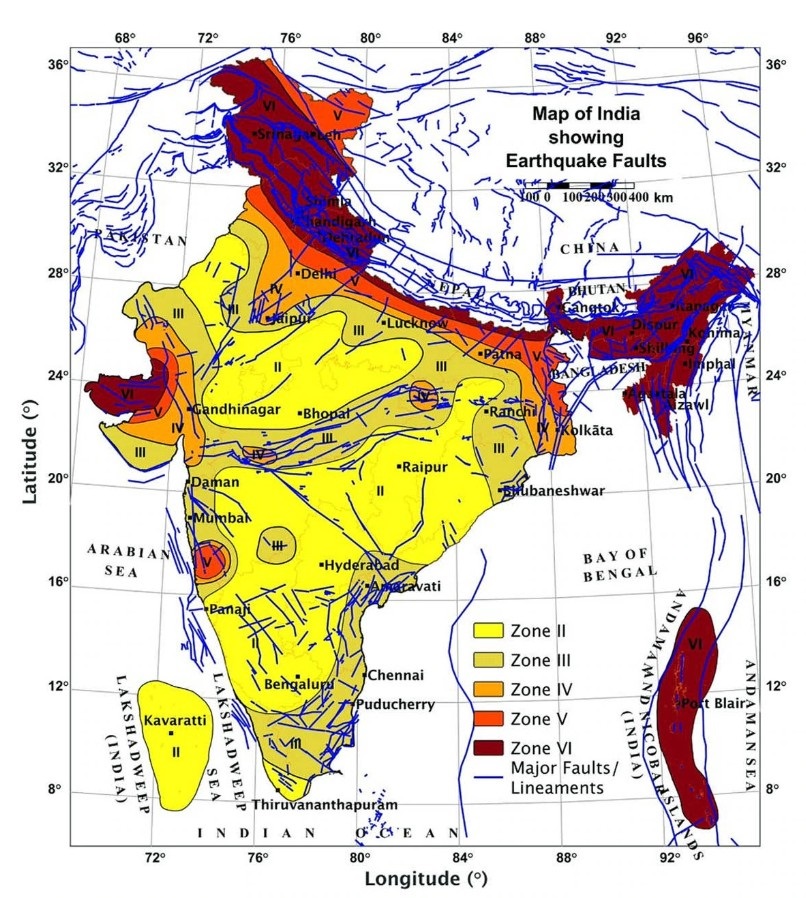
Chandigarh and Panchkula are now in ‘Zone VI’
The new map places Chandigarh and adjoining Panchkula in the most dangerous Zone VI. This means that these areas are at risk of very severe earthquakes in the future, as they are located very close to active fault lines in the Himalayas. Buildings in this zone will now have to be constructed under stricter regulations.
Amritsar–Jalandhar in ‘Zone V’
Major cities in Punjab, including Amritsar and Jalandhar, are now in Zone V (very high risk). Experts say this zone means they are more likely to experience a large and damaging earthquake. Ambala and Karnal in Haryana are also in this zone.
All new buildings, bridges, and hospitals constructed in Zones VI and V will now face stricter construction standards. Foundations may need to be strengthened by up to 50%, and steel use could nearly double. This could increase construction costs by 10–20%, but this step is considered necessary for safety reasons.
With the new seismic map, the government and experts have made it clear that it is very important for people in sensitive areas of Punjab to remain alert and give priority to safe construction.