The Aravalli mountain range, considered the backbone of Rajasthan’s identity and environment, is today forced to fight its biggest battle for survival. The Aravalli mountains, which have prevented the Gangetic plains from turning into deserts for centuries, are now in danger due to legal definitions. The Supreme Court, on an old petition filed by T.N. Govardhan of Tamil Nadu, delivered a verdict on November 20, 2025, which has raised concerns among environmentalists and experts across the country. If the Aravalli mountains are removed or destroyed on a large scale, the impact on Rajasthan, Haryana, and Delhi will be profound, long-term, and dangerous. This should be considered a crisis not just related to the environment, but also to life, water, climate, and economy.
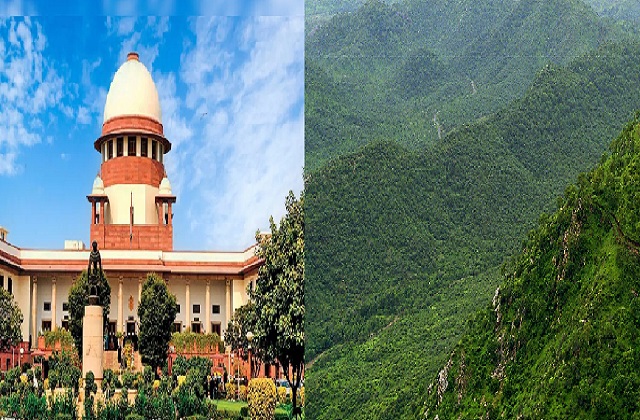
Changed definition of Aravalli Hills
A special bench of the Supreme Court has approved a new definition of the Aravalli Hills in its ruling. According to this, only those landforms that are at least 100 meters or more above ground level will be considered “Aravalli Hills.” The direct impact of this ruling is that more than 90 percent of the Aravalli Hills with a height of less than 100 meters will now be considered outside legal protection. This means that these areas, which were previously protected, can now be opened for mining, construction, and development activities.
The 2010 report raised concerns.
According to an official 2010 report, the Aravalli region had a total of 12,081 hills. Following the new definition, only 1,048 of these hills will meet the 100-meter height standard. This means that approximately 90% of the Aravalli region will no longer be considered part of the Aravalli region. Environmentalists say this decision is extremely dangerous for a mountain range that existed before the birth of human civilization but is now shrinking under human definitions.
Petition related to Nilgiris, impact on Aravalli
It’s worth noting that this petition wasn’t even related to the Aravalli region. In 1995, Tamil Nadu landowner T.N. Govardhan filed this petition to address the indiscriminate logging in the Nilgiri forests. He argued that illegal deforestation and misuse of timber were taking place. The decision in this nearly 30-year-old petition has now impacted the Aravalli Hills of Rajasthan, posing a serious threat to the environment there.