Delhi, the capital of the country, is once again going through a severe air crisis. The poison dissolved in the air has increased to such an extent that even normal breathing has become a challenge. Considering the seriousness of the situation, the Delhi government has implemented the most stringent phase of GRAP, Stage-IV. Along with this, very strict restrictions on the movement of vehicles have been implemented in the capital from Thursday. Knowing the rules is now a must for those visiting or driving in Delhi, as violations can result in heavy fines to confiscation of the vehicle.
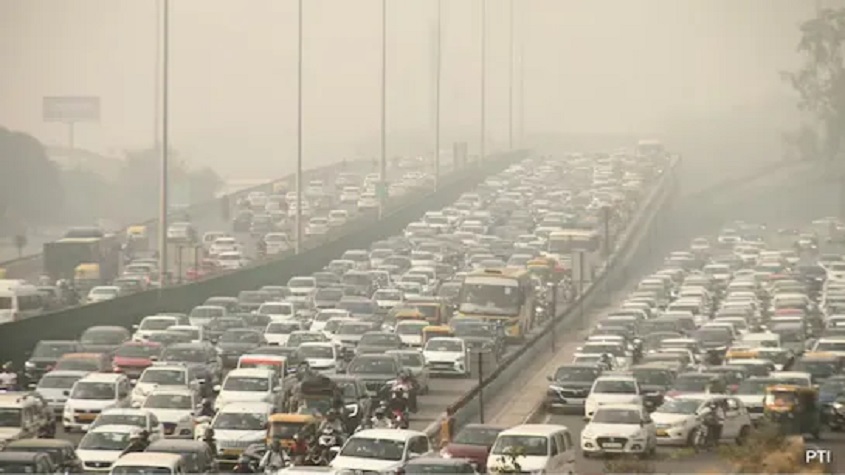
Tight security on entry into Delhi
Under GRAP-IV, all non-Delhi registered private vehicles below BS-VI have been completely banned from entering the capital. Such vehicles will be sent back from the border. Only CNG, Electric (EV) and BS-VI compliant vehicles will now be allowed to enter Delhi. Also, PUC certificate has been made mandatory for every vehicle plying in the capital.
‘No PUC, No Fuel’ rule strictly enforced
The government has implemented the “No PUC, No Fuel” rule with full force. If you do not have a valid pollution certificate, you will not get fuel from the petrol pump. A challan of up to 20 thousand rupees can be deducted for breaking the rules. To monitor this, 126 checkpoints in Delhi are active and more than 537 policemen have been deployed at petrol pumps.
Ban on trucks, buses and cargo vehicles
All trucks have been banned from entering Delhi. However, essential service vehicles related to milk, water, fruits and vegetables, grains, medicines, medical oxygen, ambulance, fire service, LPG and petrol-diesel supply have been exempted. Apart from this, BS-IV and below diesel medium and heavy goods vehicles, non-Delhi registered LCVs and BS-IV diesel buses will also remain under the ban.
Hi-tech border surveillance
is deployed in all border areas of Delhi by traffic police and transport department teams. Strict checking of vehicles is being done through ANPR cameras and spot checks. Violators will be immediately diverted or turned back from the border.
Amid the expectation that the number of private vehicles will decrease due to metro and public transport,
Delhi Metro has increased the frequency of trains, if necessary, it will be increased further. The government is also planning to increase the number of electric buses and launch a car-pooling app.
Additional measures to combat pollution
include mechanical road sweepers, sprinklers of water and modern machines for cleaning the roads in the capital. Also, with the help of IIT Madras, work on smog-eating surfaces has also been started, so that pollution can be controlled in the long run.